Digital Business Models: What's Next?

In this post I will be reflecting on what I have learnt in the module and what I have learnt from my fellow peers.
Firstly, adopting digital business models are not necessarily about redefining an organisation but about adding tangible and intangible value. Throughout the module I have found that organisations that use digital business models to leverage their abilities are not redefining what they do, but are instead enhancing their offering through the use digital tools.
A key example of where I realised this was commenting on Steven’s article, suggesting that the future of the NHS may lie with how digital business models are implemented to improve the service. My renewed understanding of how digital tools could be used to revolutionise dated services has encouraged me to think about how and what else could benefit from the implementation of technology.
Another example is my comment on Lucas’ article about Netflix’s subscription model. Learning and understanding the shift from rental to subscription, as well as gaining an insight into the value of its algorithms, highlighted how intangible products can generate significant value for customers and stakeholders. In this case the ‘recommendations’ algorithm increases the time a user spends on the service, adding value to Netflix’s value through a tool that improves a consumer's experience for free yet generates data that is measurable and marketable for shareholders.
Another key realisation is the idea that successful business models focus on trying to enhance human interactions, not replace them. The first instance of this was highlighted in my comment on Claudia's article on personal training. I raise a concern about the importance of connection with a trainer during a training session and ask whether such a tool would prohibit or enhance the interaction.
A second realisation on that tangent is the idea that creating intangible assets, such as online communities, fosterer connections and add value to a business’s offering. In an article written by Hannah, she speaks about the importance of community to the business offering of glossier and its positive impact. In my comment I challenge the broader use of this to new markets, however, the value of the online community is clear.
Both of these articles highlight how well implemented technology can enhance and improve a human interaction, but also highlight where business developers need to be careful because a poor use can limit and damage a human interaction
Taking all of this learning forward, I summarise in this short video where I hope to take this moving forward.
For reference, here are the comments I left on the blogs mentioned above:
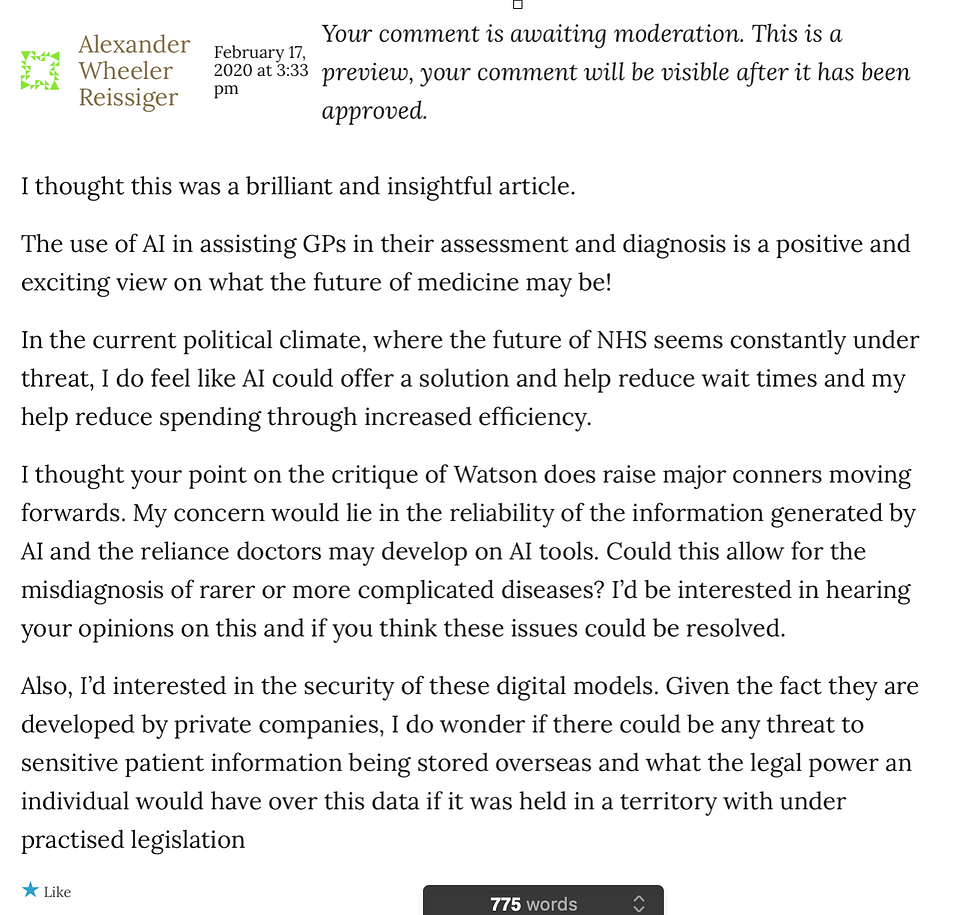
https://stevensdigitalforay.home.blog/2020/01/23/post-2-coming-soon/
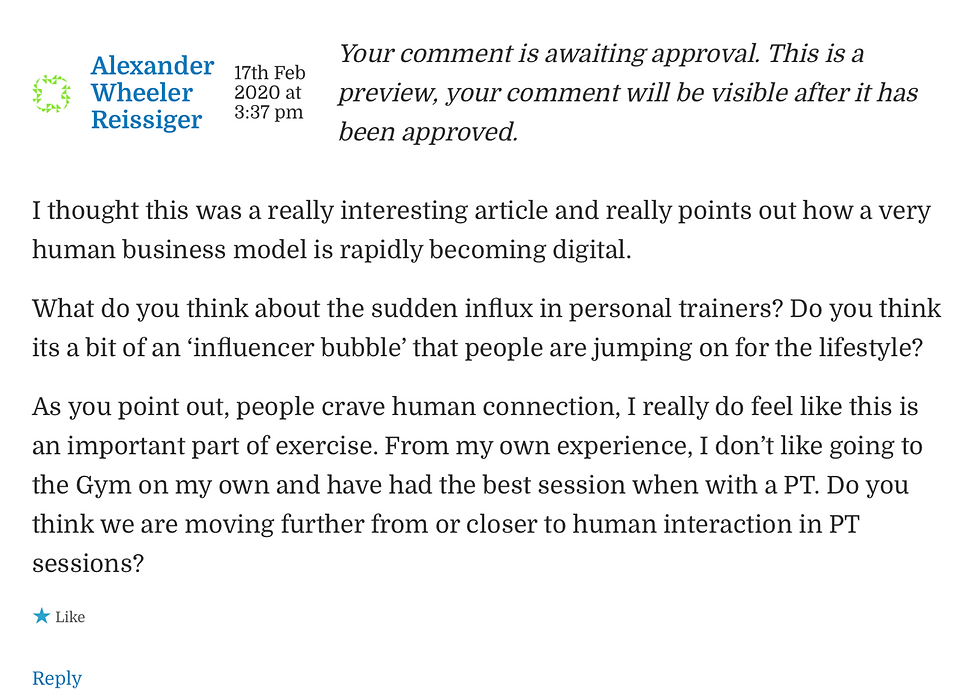
https://onclaudnine.art.blog/2020/02/13/from-personal-trainer-to-social-media-marketer-and-data-analyst/comment-page-1/?unapproved=1&moderation-hash=4eefdf055bf546e227124db0152fd8fb#comment-1
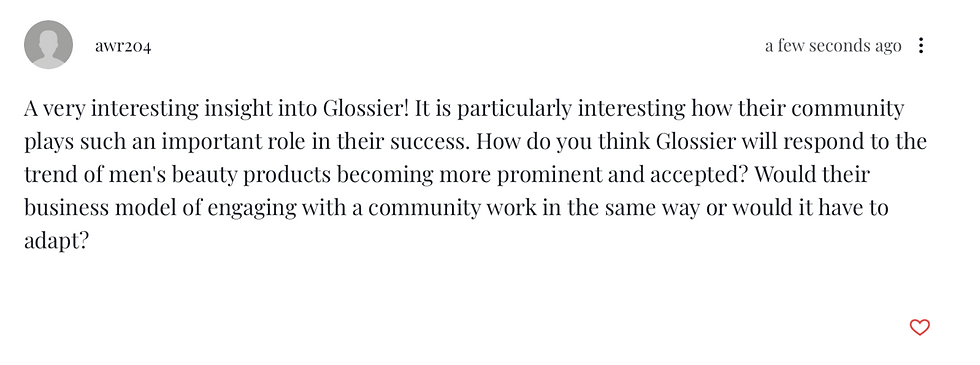
https://hlc229.wixsite.com/hannahcookson/post/a-unicorn-born-from-the-digital-ashes
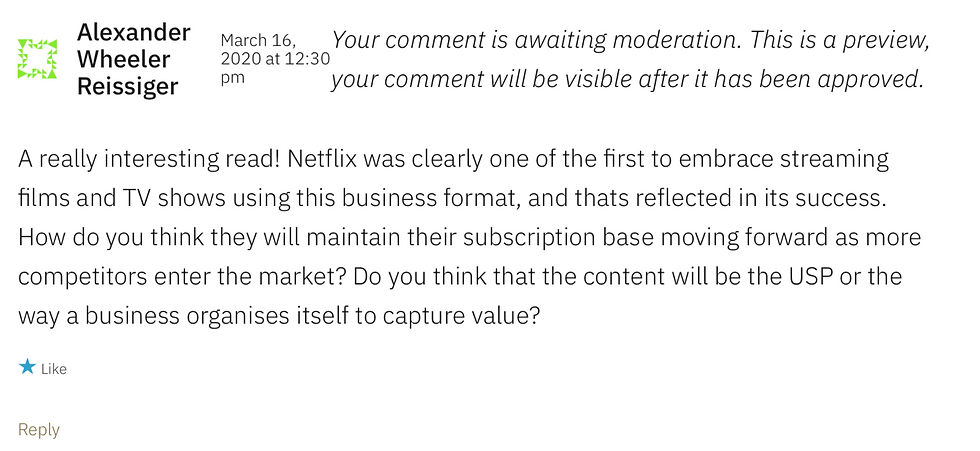
https://54948.home.blog/2020/03/05/netflix-why-being-dynamic-in-a-digital-age-has-contributed-to-its-success/2/



Comments